Thursday, January 31, 2019

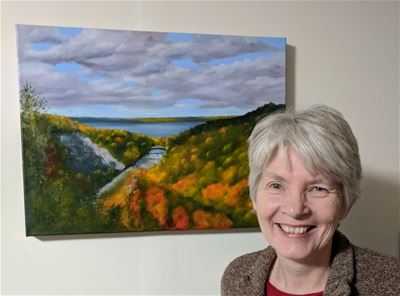
DPW Spotlight Interview: Lynne Reichhart

Each week we will spotlight a different DPW artist who will give away one of their best paintings. To enter to win Lynne's painting "New Crayons" go to Daily Paintworks and click on the link at the top of the page announcing their interview.

From Lynne's DPW Gallery Page:

Lynne Reichhart graduated from SUNY Potsdam with a BA in Computer Science. After 20 years of corporate life, she turned to her passion for art and let her creative side emerge. She found the Munson Williams Proctor School of Art and began taking classes. Lynne has always lived in Upstate New York in a rural setting. Much of her inspiration comes from nature and the beautiful Adirondack Mountains. She has also been lucky enough to travel to Europe with camera in hand for more inspirational subjects! (click to read more)

Tell us a bit about how you first started painting.

I drew and painted as a kid all the time.  I loved to draw my favorite rock stars.  My best gift as a kid ever was an art set that included oil paints, charcoal, pencils, paper and more!  This present really got me into art.  I would create until the wee hours of the morning listening to my favorite radio station.

Did you have any stops and starts in your painting career?

After my initial foray into art as a kid, I had a long break with getting a degree in computer science and my 20 year career as a systems analyst.  The deadlines and travel wore me down so I retired and took up art once again after the year 2000. Since then I have been creating art of some sort continuously and opening more on-line venues to sell my artwork.  It has been a fun ride so far and I love it!

New Crayons
(click to view)

Enter to win by clicking on the link at the top of the DPW home page announcing Lynne's interview. 

What mediums and genres have you experimented with?

Once I returned to art, I began making ACEO size pieces with colored pencil.  It turned out to be a good starting point since they are only 2.5 x 3.5 inches and didn't require many resources.  I then graduated to  4 x 6 and 5 x 7 size pieces in acrylics or watercolor selling them on eBay.  I eventually took the plunge to 'larger' pieces.  I still work pretty small in comparison to others in acrylic and watercolor.  My style is primarily realism.  With my detail oriented computer background I love to explore all the small details in my paintings.  I have dabbled in abstract work, using collage and paint, but find it very difficult for me.

Which ones have "stuck" and which ones have fallen away?

I still enjoy creating primarily smaller format art (up to 11 x 14") in a realistic style with acrylic as my favorite medium.  I have added still life subjects to my repertoire and love setting them up with favorite items I have collected.  Landscapes are my second favorite subject.  I rarely use colored pencil anymore except for adding small details to my paintings.  I have decided that abstract is not my thing.  I have two abstract collage pieces of mine that I really love, but have no plans to do more.

Cocktails and Mustard
(click to view)

Which ones are you looking forward to exploring?

I took a workshop using alcohol ink and had so much fun with it.  I purchased supplies, but have never found the time to get back into it.  I also have the supplies to try scratchboard and really want to give it a try.  The problem is that my detailed paintings take me a lot of time to create and there is always another show or commission needing my attention.  Hopefully I can give them a go soon!

Who or what inspires you most?

Even though I tend towards realism, I am inspired by the impressionists such as Monet and Van Gogh.  I also appreciate John Singer Sargent and Hopper.  I am in awe when I visit an art museum and love seeing all the different styles.  The huge paintings in the Louvre just amaze me.  I can't imagine how the artist doesn't get lost in the wall sized canvas.

I live in rural Upstate New York and am inspired by the beauty around me.  The beautiful lakes, waterfalls and mountains nearby feed my creative juices.

Montmartre Circa 1977
(click to view)

What does procrastination look like for you?

I have to admit that my favorite way to procrastinate is to spend time on the internet.  I can validate it by calling it marketing, but I need to cut it short.  Once I finally start working,  I am much more motivated.  I do have problems painting longer than a couple hours at a time.  After about 2 hours, I am ready to hang it up - unless I see a problem that needs to be resolved.  I have to fix it immediately.

What techniques work to ensure that you make time for your art?

My studio is in a corner of my kitchen.  I keep my work in progress up on my easel where I can see it.  At some point it is impossible to ignore!  I  also have 2 groups that I paint with most weeks so that gives me a reason to get off my butt and paint!

Red Poppies Three
(click to view)

How do you generally arrive at ideas for your paintings?

Since I paint from photographs, I have to admit that cell phone cameras have made this much easier.  I used to be out and about and see a scene that I would love to paint, but had no camera.  Now everyone has a camera everywhere.  Since I love to paint landscapes,  I am always looking for subject fodder when I am traveling, hiking or even just taking a walk.   When it comes to still life arrangements, they seem to just come to me.  I lay eyes on a favorite item in my house and can envision it being part of a fun still life painting.

How do you keep art "fresh?" What techniques have helped you avoid burnout and keep your work vibrant and engaging?

I find that the best way to keep art "fresh" is to be passionate about the subject.  I really have to be invested in the subject to create a great piece.  Even though I paint realistically,  I still add something of myself to each piece.  I alter a color, eliminate an object or move it around, for example.  I also try to have each new piece be a challenge in some way. For example, it may involve painting a new texture such as the first time I painted glass.

Waimea Canyon
(click to view)

What do you feel you are learning about right now as an artist?

There is a large variety of talent and personalities in the 2 groups I paint with.  I find that painting in a vacuum is difficult.  I love to see other artists' work in progress and hear what suggestions they have for my work.  I find that observing how other people see things differently than I do teaches me a lot.

What makes you happiest about your art?

When I finish with a piece and am satisfied that it is resolved to the best of my ability, I am thrilled.  I also love when others appreciate my work.  Selling a piece puts me over the moon.  The fact that a stranger spent their hard earned money on something I created is so fantastic.  Even something as simple as a person 'liking' my painting on Facebook gives me a lift.

Thanks, Lynne!

© 2019 Sophie Marine

Thursday, January 24, 2019

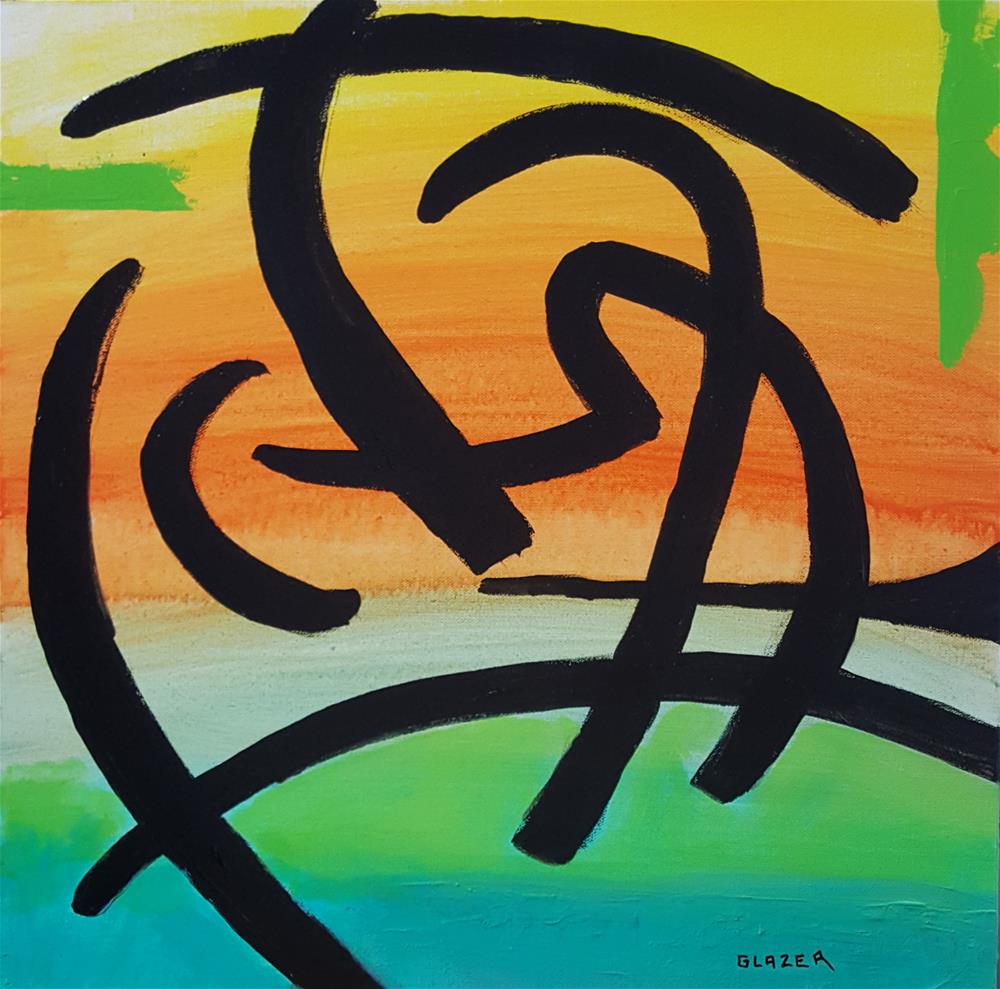
DPW Spotlight Interview: Stuart Glazer

Each week we will spotlight a different DPW artist who will give away one of their best paintings. To enter to win Stuart's painting "Happy Travels" go to Daily Paintworks and click on the link at the top of the page announcing their interview.

From Stuart's DPW Gallery Page:

Stuart Glazer is a native of Detroit, MI and currently resides in Boca Raton, FL. He comes from a family of artists and musicians. His grandfather was an accomplished artist who influenced Glazer throughout his early childhood. During his adolescence Glazer took art instruction from regionally-known artists Ben Glicker and Robert Dowd, and majored in art at a high school for the arts in Detroit. Later, Glazer embraced music, following the path of his parents who were both musicians. Glazer's Bachelor's and Master's degrees in music were from Eastern Michigan University. He received his Ph.D. in Fine Arts from Texas Tech University. (click to read more)

Tell us a bit about how you first started painting. 

When I was a kid, my grandfather, who was a painter, gave me drawing lessons. Later, I took Saturday lessons with Ben Glicker, a Detroit-based artist, and began learning to paint in oils.

Did you have any stops and starts in your painting career?

Yes, I did. While in high school, I gave up art for music. I subsequently made a career as a college music professor and composer. During that time, I continued art endeavors, mostly in pastels. I’ve always been torn between art and music. I subsequently received a Ph.D in Fine Art from Texas Tech University. I chose that program because it included coursework in both art and music. About 15 years before retirement, I started painting again and found I loved it, and I’ve been painting ever since.

Happy Travels
(click to view)

Enter to win by clicking on the link at the top of the DPW home page announcing Stuart's interview.

What mediums and genres have you experimented with?

I enjoy painting with acrylics and have stayed with that. I’ve experimented in many styles chronologically. At first I worked in a style called Linear Expressionism, founded by a friend of mine, the French artist, Jean Claude Gaugy. Next, I was painting in realism. Later, I worked in a style that is sort of neo-cubist and very colorful, almost Fauvist. I still do this style, but have added more colorful expressionistic portraits of musicians (mostly jazz) and other popular icons. I’ve recently added non-objective abstracts to my repertoire. Now I work in three styles – neo-cubist, expressionistic portraits, and abstracts.

Which ones have "stuck" and which ones have fallen away?

Linear Expressionism and Realism have fallen away. The others have stuck.

Asian Autumn
(click to view)

Which ones are you looking forward to exploring?

I’d like to explore abstraction more. I feel that I can also go further with the portraits.

Who or what inspires you most?

The work of other artists inspires me most. Namely, Picasso, Matisse, and some abstract artists as well.

Zen
(click to view)

What does procrastination look like for you?

I’ve never had a problem with procrastination.


What techniques work to ensure that you make time for your art? 

When I was teaching, I painted in the evening and all day during summers. Since I retired from teaching, I paint just about every day. I feel best when I’m painting.

Jerry Garcia
(click to view)

How do you generally arrive at ideas for your paintings?

I usually make notes or sketches in the morning of what I want to do next, or what I need to do on a piece in progress.


How do you keep art "fresh?" What techniques have helped you avoid burnout and keep your work vibrant and engaging?

That’s not a real problem for me because I go back and forth in the three styles I work in, although I found lately that more and more I work with palette knives as a new way of working.


John Coltrane
(click to view)

What do you feel you are learning about right now as an artist?

Since I got a late start, I’m always learning. Right now I’m still learning about abstraction, how to convey a message without a subject. I find that fascinating. 


What makes you happiest about your art?

Two things make me happy about my art. First, I’m happy when I finish a piece that I feel is really good. Second, when I’m working on something and it’s really going good, as if the piece is painting itself. That feels really good.

Thanks, Stuart!

© 2019 Sophie Marine

Thursday, January 17, 2019

DPW Spotlight Interview: Bhavna Misra

Each week we will spotlight a different DPW artist who will give away one of their best paintings. To enter to win Bhavna's painting "Superbloom" go to Daily Paintworks and click on the link at the top of the page announcing their interview.


From Bhavna's DPW Gallery Page:

Bhavna is a fine artist and an art educator working out of her Bay Area based art studio in California. She paints portraits, wildlife, nature, and everything that appeals to her. She specializes in creating custom artwork suitable for home and office. Oil has been her choice of medium for most of the recent works and she also uses pastels, acrylic and colored pencils. (click to read more)

Tell us a bit about how you first started painting.

I started to paint from an early age. When I was about 9, we had my grandfather’s friend, an artist of great renown, visit us. With him, a lot of interest associated with arts entered into our household – he’d paint, draw, and talk about the arts. I watched him paint and sketched alongside. Before leaving, he admired my drawing skills at great length and mentioned noticing never seen before raw talent in me, to my parents. His recognition brought immense joy to my family and a sense of confidence in me for my craft. That day on, my artistic endeavors were supported unconditionally.

I grew up in the hilly, mountainous region near the Himalayas and was fortunate to explore and illustrate to my heart’s delight. My mother helped me understand the advantages and limitations of different media and stressed on the need of a strong foundation of drawing. I was especially drawn to sketching faces and practiced everyday.

Did you have any stops and starts in your painting career?

I graduated with a college degree that led me to a career in the field of Science and Technology. I painted on the side, but did not ‘exhibit’ art formally for the longest time. Somewhere down the line, I decided to display my work in student shows at the local community college where I took art classes. That experience motivated me to open my body of work up for public display. Since then, I have been showing my work in art galleries, museums, and juried shows. Art and Science, both fields compliment each other and help me follow a balanced approach.

Superbloom
(click to view)

Enter to win by clicking on the link at the top of the DPW home page announcing Bhavna's interview.

What mediums and genres have you experimented with?

Oil has been my medium of choice but I also use pastel, acrylic, and occasionally, watercolors.

Which ones have "stuck" and which ones have fallen away?

I do not use charcoal very often, simply because it requires continuous finger cleaning.

Staying Away from Sugar
(click to view)

Which ones are you looking forward to exploring?

I hope to develop deeper understanding of oils and effects of its relative color placements.

Who or what inspires you most?

The interesting compositions! Be it portrait, landscape or anything else. I feel engaging elements give the right start to a work, upon which colors, contrasts, and techniques can be experimented.

Who Pushed Me?
(click to view)

What does procrastination look like for you?

Planning ahead as much as possible helps. Giving a cushion of time under the deadlines help me set the practical timer. I do leave a lot to the last minute but I am working on it.

What techniques work to ensure that you make time for your art?

I like to keep a monthly journal of goals for my art career. It is divided into weekly and then daily tasks. At the end of every day, I review it, to make sure my goals are checked off the list. I keep a set time dedicated for studio practice.

Social media is a great tool to make a public commitment, such as art challenges. So, I try to make use of it to stay motivated.

Confetti Forest
(click to view)

How do you generally arrive at ideas for your paintings?

To choose the subject for the day, I am not very strict. Whatever makes me excited at the start of the studio time gets painted that day. I kind of like to surprise myself!

Having said that, I like to work in series. That helps me repeat a common theme over and over again. Also, I choose the area I need to practice on and focus on that across the genres. For example, if I need to understand the color relationship of pink against other hues in the spectrum, I would experiment with landscapes, still life, and portraits using those colors. Once I am satisfied with what I was looking for, I move on to next learning goal.

How do you keep art "fresh?" What techniques have helped you avoid burnout and keep your work vibrant and engaging?

Moving across the genres, or type of the subject helps. Sometimes I take a break and use that time for less artsy stuff like varnishing and organizing and such. Stepping back to basics always helps.

Anaar
(click to view)

What do you feel you are learning about right now as an artist?

I am trying to explore ways to make art more accessible to public. For this, I have started an Art in Community program. The aim is to display art for wider audience by exhibiting it at less formal settings such as coffee shops, lobby areas, and public transport. I am making collaboration efforts with the local businesses to be part of it.

What makes you happiest about your art?

Everything! Art has the power to bring joy, enforce a sense of accomplishment, strengthen community engagement, and make a lasting impression. I am very fortunate to have received the ability to make theme-oriented, meaningful work and when it resonates with someone, it makes my efforts worthwhile.

Thanks, Bhavna!

© 2019 Sophie Marine

Thursday, January 10, 2019

DPW Spotlight Interview: Kristine Kainer

Each week we will spotlight a different DPW artist who will give away one of their best paintings. To enter to win Kristine's painting "Avocado Halves" go to Daily Paintworks and click on the link at the top of the page announcing their interview.

From Kristine's DPW Gallery Page:


As a child in a military family, I spent my formative years moving frequently along the Eastern Seaboard. I graduated from The College of William and Mary with a degree in Art History and high hopes. Unfortunately, job opportunities were few and unfulfilling. I returned to school, earned a Master’s degree from George Mason University, and began a career teaching mathematics in the northern Virginia area.

When an opportunity arose to buy my husband's grandfather's 1928 farm in rural Texas, we left the hustle and bustle of the Washington, DC area to experience a slower, calmer pace of life. During this time of semi-isolation and reflection, my creative spark was ignited in the form of painting. (click to read more)

Tell us a bit about how you first started painting.

“Paint by Numbers” was my favorite gift during my early childhood.  I enjoyed organizing my little plastic containers and watching a piece of art magically appear at my will.  Eventually, though, I became bored with the lack of flexibility and focused on drawing, where I could be in total control and make all the decisions.


Avocado Halves
(click to view)

Enter to win by clicking on the link at the top of the DPW home page announcing Kristine's interview.

Did you have any stops and starts in your painting career?

I never used a paintbrush again (except to paint rooms and furniture) for a few decades.  I was too busy teaching mathematics and raising my little family in the Washington, DC area.  It wasn’t until I moved to a small farm in Texas that time became available for artistic creativity.

Bay Oyster
(click to view)

What mediums and genres have you experimented with?

Watercolors were my first medium.  They were relatively inexpensive (at least, the ones I purchased were!) and clean up was easy.  However, I did not like my options for framing them—mats, glass, the frame itself had to be ordered ready-made online and choices were limited. I switched to acrylics so that I could wire the stretched canvas and enjoy my work immediately.  Framing was then optional.
One day my world changed.  I took a 3-day group oil painting class—my first painting class ever—with an artist whose work I admired on eBay.  I purchased all the recommended oil paints and supplies and arrived ready to learn from her.  I was a human sponge.

Which ones have "stuck" and which ones have fallen away?

I use oils exclusively for my canvas pieces.  I also make Lazy Susans in which I start with acrylics, then add rich color and details with oils.


Bacon and Eggs
(click to view)

Which ones are you looking forward to exploring?

There is always more to learn with oils.  I seek to master them, knowing that it will never happen.  


Who or what inspires you most?

As an introvert, I spend a lot of time with my thoughts.  Being able to look beyond my inner world to really “see” what is around me and attempt to “capture” it on canvas is always inspirational. No matter how small or insignificant, it has some semblance of importance to someone.  I celebrate that. 


Crawfish Boil
(click to view)

What does procrastination look like for you?

There is no place for procrastination in my world.  When there are tasks to be accomplished, I prioritize them and work until each one is eliminated.  I actually experience a bit of an adrenaline rush as I go from task to task:  painting, marketing, shipping, entering juried exhibitions.  All are necessary and only I can accomplish them to my satisfaction.


How do you generally arrive at ideas for your paintings?

I often paint food (especially eggs and oysters).  I am constantly taking reference photos and, if possible, paint from life.  Just eating is an inspiration.  Restaurants, supermarkets, and the beach are ideal locations for generating new subject matter.

Free at Last
(click to view)

What do you feel you are learning about right now as an artist?

Social media is changing the world. Trying to expose my art to others using marketing techniques that are new and constantly evolving is a daily challenge.  Social media though, has also become my new classroom.  I have learned so much from so many other artists through direct and indirect contacts -- just having their work at my fingertips on my smartphone, tablet, and computer and reading their comments has been invaluable to my growth as an artist.

What makes you happiest about your art?

When a client, admirer, or fellow artist praises my work, that adrenaline rush returns; it will never get old.

Thanks, Kristine!

© 2019 Sophie Marine

Thursday, January 3, 2019

DPW Spotlight Interview: Hall Groat

Each week we will spotlight a different DPW artist who will give away one of their best paintings. To enter to win Hall's painting "Eclair" go to Daily Paintworks and click on the link at the top of the page announcing their interview.

From Hall's DPW Gallery Page:

Painter Hall Groat II, professor and chair of Art and Design at SUNY Broome Community College, teaches foundation courses in painting, drawing, color theory, and computer graphics. Groat earned a master of fine arts degree in painting and drawing from City University of New York at Brooklyn, a bachelor of arts in art history, minoring in studio art at Binghamton University, and attended graduate and certificate programs at Buffalo State College, Syracuse University, and Savannah College of Art and Design. (click to read more)

Tell us a bit about how you first started painting.

I started painting during my early teens, but did not get serious until college and graduate school. I minored in Fine Arts and majored in Architectural History as an undergraduate at Binghamton University during the late 1980’s and early 1990’s.  Then, I earned a Master of Fine Arts Degree in Painting and Drawing at Brooklyn College. At Brooklyn College I studied painting with Lennart Anderson and Lois Dodd. I become more serious about my work after grad school.


Did you have any stops and starts in your painting career?

I’ve always consistently created paintings, and when I don’t paint for a week or two I become a bit depressed. Making paintings is very cathartic for me. It’s similar to a “runner’s high.” I always feel great after painting for a few hours.  Making paintings is a way of life.


Eclair
(click to view)

Enter to win by clicking on the link at the top of the DPW home page announcing Hall's interview.

What mediums and genres have you experimented with?

As a teen, I worked in acrylic, and then in college began to use oil paint.  This was the preferred medium within college fine art programs. During graduate school I worked in watercolor for a short period. I used to carve stone during my teens, too, and used pneumatic chisels to carve intricate reliefs of eagles on slabs or marble and flagstone.


Which ones have "stuck" and which ones have fallen away?

Oil painting has always been my preferred medium.  I have not carved stone since my teens, as it requires very specialized tools and a studio.  And if you carve stone in your backyard you must not live too close to other residences, or have neighbors that don’t mind the loud banging of hammers and the sound of an air compressor powering the pneumatic chisels.


Nature's Wrath
(click to view)

Which ones are you looking forward to exploring?

I most likely will always work with oil paint, and perhaps one day explore watercolor again.

Who or what inspires you most?

I’m often inspired by revealing something extraordinary within ordinary, mundane subjects. Everyday objects often engage me. I’m also inspired by the abstract nature of nocturnal urban scenes. Dutch master paintings, such as Rembrandt are most inspiring to me.  I’m drawn to the dramatic use of Chiaroscuro connected with 17th century Dutch painting. I’m also inspired by the color and light connected with French Impressionism.

In terms of subject matter, still life, landscape and architectural motifs inspire me. I’m also drawn to subjects involving popular culture.

Rainy New York Night
(click to view)


What does procrastination look like for you?

I typically do not procrastinate, which helps me avoid stress. I like to get things done ahead of time, and this is what I try to instill within my students. Many young people this day and age, do procrastinate.


What techniques work to ensure that you make time for your art?

I usually paint more during the summer months when school is not is session, and also during holiday breaks.  During the fall and spring semesters it is often difficult to find time to create new paintings, although I do try to work on smaller one o two hour studies during the week when I’m not teaching at the college.

Thief of the Past and Future
(click to view)

How do you generally arrive at ideas for your paintings?

Travel, studying nature, and spending time with friends is what inspires me to paint.  Working with my college students at SUNY Broome Community College also invigorates me.  I also take on quite a few commissioned paintings throughout the year, which often times force me to interpret a subject in a new way.


How do you keep art "fresh?" What techniques have helped you avoid burnout and keep your work vibrant and engaging?

Exploring new ideas through travel keeps things fresh.  Many of my paintings are based on places I’ve traveled to, such as Ring of Kerry in Ireland and New York City.


Peanut Butter and Jelly Sandwich
(click to view)

What do you feel you are learning about right now as an artist?

In 2019 I plan on painting larger pieces over longer periods of time.  The small 8x10 in. studies are always fluid and fresh, but can be limiting.

What makes you happiest about your art?

I’m never satisfied with my work, and always striving to grow.

Thanks, Hall!

© 2019 Sophie Marine

Thursday, December 27, 2018

DPW Spotlight Interview: Liz Demer

Each week we will spotlight a different DPW artist who will give away one of their best paintings. To enter to win Liz's painting "Don't Feed the Bears" go to Daily Paintworks and click on the link at the top of the page announcing their interview.

From Liz's DPW Gallery Page:

Hi there! I'm a Canadian-American artist and illustrator currently living in the beautiful Okanagan Valley of British Columbia. I'm an accountant by day, but at night I like to hide in my studio (aka at my dining room table) and create weird shit. I work primarily in small-format ink and watercolor, and love to use surreal moments and characters to create scenes of whimsy and danger.

I also create tutorials for many of my works! Interested in the process? Want to see the play-by-play of how an image progresses? Just need confirmation that every painting looks terrible about halfway through? Please check out my website to see fun tutorials like the one for "Don't Feed the Bears" below. Thank you for checking out my site!

Tell us a bit about how you first started painting. 

To be honest, I don’t really remember. My grandma is the real artist in the family, and she was always very supportive and encouraging of my creative side when I was young. I recall drawing quite a bit growing up, and to this day pencil sketching is still where I’m strongest, artistically. I probably started painting around the time that art classes became an elective option in school, but that was motivated more by avoidance of math (at the time) than anything else. My first attempt at university was in an art program, and I fell in love with my illustration classes which still influence my work today.

Did you have any stops and starts in your painting career? 

Oh gosh, yes. This is a bit embarrassing, but I kind of dropped out of art school two semesters shy of graduation. I’ve since completed both an undergrad and master’s in business and accounting, which may make me the only person who is both a CPA and an art school dropout. (If there are others out there please feel free to reach out; we can start the world’s saddest club!) In the last few years I’ve stopped and started several times, but I’ve been on a pretty steady streak lately that I’m trying to nurture and grow.

Don't Feed the Bears
(click to view)

Enter to win by clicking on the link at the top of the DPW home page announcing Liz's interview.

What mediums and genres have you experimented with?

I’ve worked with just about every medium and genre under the sun at one point (thanks art school!). I’ve had formal classes in life drawing, oil, acrylic, watercolor, sculpture, printmaking, and probably a few I’m forgetting. While it was nice to have had the opportunity to work with so many different mediums, it’s made it more difficult for me to just focus on one and put in the time needed to get better.

Which ones have "stuck" and which ones have fallen away? 

I like working in watercolor not because I’m particularly good at it (especially not in a traditional way), but because it’s compact, easy to start or stop when time permits, and facilitates painting every day. I’ve also found it to be one of the most difficult mediums to do well. It has a bit of a mind of its own, and can oscillate between delightful and frustrating depending on the day. I’ve been able to make up for my relative weakness in painting by starting with a strong foundational sketch, and finishing with pen & ink work for the detail. It’s not the most elegant approach, but it’s taking my work in a direction that I like.

One of my favorite mediums is actually printmaking (especially making my own silk screens), but I’ve had to let that fall away due to the setup time and material cost. I enjoyed the multi-faceted approach of creating a design, breaking it into layers, making the screens, and finally pulling prints, but I think that’s going to have to wait until I’m not working full-time (so, a few decades).

Fuzzy Wings
(click to view)

Which ones are you looking forward to exploring?

I’d like to get back into oils at some point. I have some ideas for larger-format paintings that will require a medium that lends itself to blending better than watercolor, but I’m hesitant to jump into a new medium until I’ve put in the time to get where I want with my current approach.

Who or what inspires you most? 

This question is tough to answer because there are so many! Some of my earlier influences included Bill Watterson’s Calvin & Hobbes comics, Edward Gorey’s Gashlycrumb Tinies, the anatomy-inspired art of Alex Grey, and of course Ralph Steadman’s gonzo art. My current style is influenced by a number of artists I follow on Instagram including Lauren Marx, and Caitlin Hackett, and of course my former illustration professor, Bill Carman, who’s work is unmatched in creativity and style.

The One That Got Away
(click to view)

What does procrastination look like for you? 

Cleaning. It’s always been cleaning, which is a good and a bad thing, I suppose. That and playing with my dog, Charles. She’s just too adorable and distracting.

What techniques work to ensure that you make time for your art? 

I’ve found that getting into a daily habit is the best way for me to make time. I try to finish 3-4 small paintings a week, and after I’m done with one I’ll immediately start sketching the start of my next one. This way I can get started as soon as I’m home from work without having to stop and think about what I’m going to be working on. I also have a 15-minute rule, which is that I need to draw/paint/sketch/etc. for at least 15 minutes every day. That usually turns into much longer, but knowing going in that I only need to work for 15 minutes makes it harder to talk myself out of it.

Golden Goose
(click to view)

How do you generally arrive at ideas for your paintings? 

I’ve trained my social media feeds to show mostly artists I’m following at the moment, as well as feeds from art magazines and tutorial sites. A few minutes of scrolling is usually enough to give me an idea to start on, whether that’s a particular animal, color scheme, or drawing approach. I shamelessly steal techniques and approaches from other, better artists, to incorporate into my own compositions and paintings. Other times I come across something irresistible (like a picture of a screaming baboon, or an abnormally large snail) that I’ll just have to draw right then. This usually results in a fun drawing, but a weird layout that requires saving through creative approaches. I have some fun blog posts on how I arrived at the ideas for many of my paintings on my artist website https://lizdemer.com/.

How do you keep art "fresh?" What techniques have helped you avoid burnout and keep your work vibrant and engaging?

Sticking to smaller formats has helped me avoid burnout by putting less pressure on each individual work. I can take more risks when the potential consequence is only 6” x 8”, and I don’t feel like I have to take the same exact approach that’s worked in the past. I also always have a sketchbook (or watercolor book) in progress to explore new techniques and styles. I’m currently working through a few tutorial books as a way to challenge myself and (hopefully!) get better.

Crabby
(click to view)

What do you feel you are learning about right now as an artist? 


How to not compare myself to others. Technology has made it so easy to consume art and follow the work of a lot of really good artists. I need to work on separating my appreciation for other’s work from judgement of my own, otherwise the self-doubt can get overwhelming. There’s always going to be someone better out there, the important thing is to work on improving my work, and to only compare myself against where I’ve been.

What makes you happiest about your art?

The realization that it can bring a small amount of joy to other people’s lives.

Thanks, Liz!

© 2018 Sophie Marine

Thursday, December 20, 2018

DPW Spotlight Interview: Annemiek Haralson


Each week we will spotlight a different DPW artist who will give away one of their best paintings. To enter to win Annemiek's painting "Full of Wonder" go to Daily Paintworks and click on the link at the top of the page announcing their interview.

From Annemiek's DPW Gallery Page:

Creating something on a blank piece of paper was always irresistible to me while growing up. Over the years I took several workshops and classes, and kept painting on and off. In the past few years I was lucky enough to find great mentors who encouraged me, and I started painting almost daily.

I enjoy painting outdoors, finding that being in the actual environment has helped me feel more connected to the painting. Often these outdoor paintings will lead to a larger studio piece. The natural beauty of the Finger Lakes area in New York provides an endless source of inspiration.

You can find my larger paintings at www.annaharalson.com

Tell us a bit about how you first started painting.

I can’t remember a time I was not sketching or drawing. A few years ago my mom brought over a huge pile of art work I had done as a kid. I had forgotten all about how prolific I was! It showed me I had always had it in me to express my view of the world through art.

Did you have any stops and starts in your painting career? 

Many! While in high school I briefly thought about art school, but that little voice in my head was getting in the way, telling me I would never be good enough at it. I went to nursing school instead, which has been a beautiful career. Art kept tugging on me though. A workshop in watercolor long ago made me fall in love with that medium. Between my nursing career, going back to school, and raising kids I took the occasional class or workshop. I painted intermittently. This would go in spurts; sometimes nothing for months, and then I would pick it up again. It was a struggle. Once you take a little break it is like starting all over again each time. I realize now I should have stuck to it, and not gotten discouraged so easily. About four years ago I took a college class in drawing, and completely lost my heart to art. I felt like this is what I was meant to do. My teacher was very encouraging, even said to show my work. I did, and things have just taken off from there.

Full of Wonder
(click to view)

Enter to win by clicking on the link at the top of the DPW home page announcing Annemiek's interview.

How do you define success as an artist?

I have thought a lot about what success means for me as an artist. Success is in the small victories. It is in growing in skills, overcoming hurdles. It is any time I finish a painting that I am reasonably satisfied with. In other ways it is in knowing that people can get an emotional connection to something I put on a blank piece of canvas. The first time somebody told me they cried when they saw my painting I felt like “this is what I am meant to do.” That went straight to my heart, wow!
I once had an open studio where only one person showed up. That could be seen like it was a miserable failure, but I refused to see it like that. The person that came fell in love with a painting, and bought it. It was of a farm where he used to work as a teenager, and he shared stories about this with me. So I considered the day a success.

What techniques work to ensure that you make time for your art?

I find that I have to approach making art as something that is on my priority list of things to do. A few years ago I met another artist who became my mentor. At that time she was challenging herself to draw or paint every single day for a year. I thought I would give that a try also, but quickly realized five days a week was a more realistic goal for me. Some days I would draw or paint only fifteen minutes, other days it was hours. I found it easier to make time for art when I set myself this drawing goal.

Snow Cones
(click to view)

I kept it up for a full year, and by then making time had become such second nature that I still continue this practice. A day without art does not feel complete anymore. I have my sketchbook with me a lot, often when I walk the dog, for a quick sketch here or there. I have sketched at airports and in waiting rooms. I have drawn kitchen items while dinner was cooking. I even drew my husband’s hand with an IV in it when he was in the hospital! I mean, it does not always have to be something earth shattering. Some of my sketches are no more than scribbles. Making time for art does not always have to be a whole day in the studio, and not everything has to be beautiful or showable. This approach has really helped me to work art into my daily routine, and I wish I had done this sooner.

What mediums and genres have you experimented with? Which ones have "stuck" and which ones have fallen away? Which ones are you looking forward to exploring?


Most of my life I’ve been working in graphite, charcoal, pen and ink, and watercolor. Three years ago I started working in oils, and that has sort of taken over. It is my new love. I’ve tried pastels. Loved that too, but framing not so much. I was introduced to ink washes in my drawing class, and really liked that. I might work in that more. I just visited an exhibit of Whistler’s etchings. Wow, wouldn’t that be nice to learn!

Summer Evening Plein Air
(click to view)


What does procrastination look like for you?

I'd rather procrastinate in doing house cleaning than in painting! My biggest procrastination is in setting goals for myself; sitting down and thinking about what I want to accomplish instead of diving headlong into things.


Who or what inspires you most?

I love to look at the old masters, the Hudson River School of Painters, Sargent, or Winslow Homer. I am inspired mostly by nature. Any time I take a walk in the woods I come out with fresh energy and ideas.

Today is a Memory
(click to view)

How do you generally arrive at ideas for your paintings?

A drive in the country side or a walk in the woods will fill my head with ideas for paintings. I keep a written list of ideas and sketch a lot. I refer to these if I feel like I am stuck on what to paint next. Inevitably an idea for a new painting will form. What also helps me is to think in series. I painted fifty birds for a show this year. Besides really pushing you to paint when you have a deadline, it is good to have a set subject. Although fifty is maybe a bit extreme of a number for a series!

How do you keep art "fresh?" What techniques have helped you avoid burnout and keep your work vibrant and engaging?

I have not encountered burnout in painting yet, but from my nursing career I know how to recognize the signs of burnout. As soon as that happens, it will be time to try something new, maybe try a new medium, a workshop, or any other new challenge.

Across the River I Must Go!
(click to view)

What do you feel you are learning about right now as an artist?

Everything! I feel like I have only begun to scratch the surface of what there is to know. I learn from looking at art, books, videos and the occasional workshop. I approach every painting as a learning experience, and feel like I have grown a lot in the past few years. I am learning more about marketing, and recently went to an “Artist as Entrepreneur Boot Camp” by the New York Foundation of the Arts, a three day workshop in everything from marketing, to grant writing, to legal issues. My goal is to keep learning and growing in every aspect.

What makes you happiest about your art?

I really am in my “happy place” when I am working on my art. There are frustrations of course, but when I work through the difficulties I am happy. And it makes me all warm and fuzzy when someone makes an emotional connection with a piece that I have created.

Thanks, Annemieke!

© 2018 Sophie Marine